Walmart Delivery Driver Requirements: Complete Guide for 2026
Outline and Why Walmart Delivery Driver Requirements Matter
Walmart delivery work sits at the crossroads of retail, logistics, and flexible income, which is why many applicants want a clear picture of the driver requirements before they commit time to the sign-up process. What looks simple from the outside often involves age rules, vehicle standards, insurance documents, background screening, smartphone setup, and the important distinction between employee roles and independent contractor work. This guide turns those moving pieces into plain English so you can judge whether the opportunity matches your schedule, budget, and expectations.
The topic matters because delivery has become part of everyday shopping rather than a niche convenience. Customers now expect groceries, household essentials, and last-minute items to appear at the door with very little friction. That expectation creates opportunity, but it also creates pressure on drivers to be punctual, organized, and comfortable with app-based work. A person who skips the fine print may discover too late that their vehicle is too small for the orders available in their zone, their insurance paperwork is outdated, or the role they chose functions more like self-employment than a standard job.
To keep the article easy to follow, here is the road map:
- The first part explains the broad landscape of Walmart delivery roles and why the requirements can vary by program and market.
- The second part breaks down the common personal eligibility standards, including age, licensing, identity, and driving history.
- The third part covers practical tools of the trade, such as vehicle type, insurance, registration, and smartphone readiness.
- The fourth part walks through the application and screening process while comparing contractor and employee arrangements.
- The fifth part looks at real-world work conditions, earnings factors, and how to decide whether the role is a good fit.
One important note: this is an editorial guide, not an official policy page. Walmart-related delivery requirements can change, and some roles are offered through partner platforms rather than directly by Walmart stores. Still, the patterns are consistent enough to help you prepare. If you understand the basics before applying, you are far less likely to waste time, money, or patience on a role that sounds flexible but does not actually fit your circumstances.
Basic Eligibility: Age, License, Background Check, and Role Type
When people search for Walmart delivery driver requirements, they often assume there is one universal checklist. In reality, the first question is which kind of driver role you mean. For many applicants, the most familiar route is Spark Driver, a delivery platform used by independent contractors to accept orders from Walmart and, in some markets, other participating merchants. In other cases, delivery work may be tied to a store-operated or employee-based program, which can bring a different hiring structure. That distinction shapes nearly every requirement that follows.
For contractor-style delivery work, the baseline standards are usually straightforward. Applicants are commonly expected to be at least 18 years old, hold a valid driver’s license, provide tax and identity information, and consent to a background check. They also need access to an insured vehicle and a compatible smartphone. The background review generally looks at driving history and may also include broader screening based on the rules in the applicant’s state. A perfect record is not always required, but a pattern of serious violations can become a barrier.
Employee-based delivery roles may add more formal steps. Those roles can include interviews, work authorization verification, training modules, scheduled shifts, and store-level supervision. In practical terms, that means the applicant is being considered for a job inside a company structure rather than simply being activated on a delivery app. The trade-off is clear: employee roles may offer more predictable procedures and closer support, while contractor roles usually offer greater flexibility over when to work.
Here are the most common personal requirements applicants should expect to review:
- A minimum age requirement, often 18 or older for delivery gigs, though exact rules can vary by role.
- A valid driver’s license in good standing.
- A reasonably acceptable driving record.
- Consent to a background screening process.
- A Social Security number or other required tax identification for onboarding.
- The legal ability to work or contract in the relevant market.
A simple comparison helps. Imagine two applicants. One is a college student with a clean license, a compact car, and free afternoons. That person may find a contractor platform appealing because it allows selective scheduling. Another applicant wants a steadier routine, clearer supervision, and a fixed weekly pattern. That person may prefer an employee delivery role if one is available locally. The requirements overlap, but the experience feels very different. Knowing which lane you are entering is half the battle, and it prevents the common mistake of treating gig work and payroll employment as if they were the same thing.
Vehicle, Insurance, and Technology Requirements You Should Prepare First
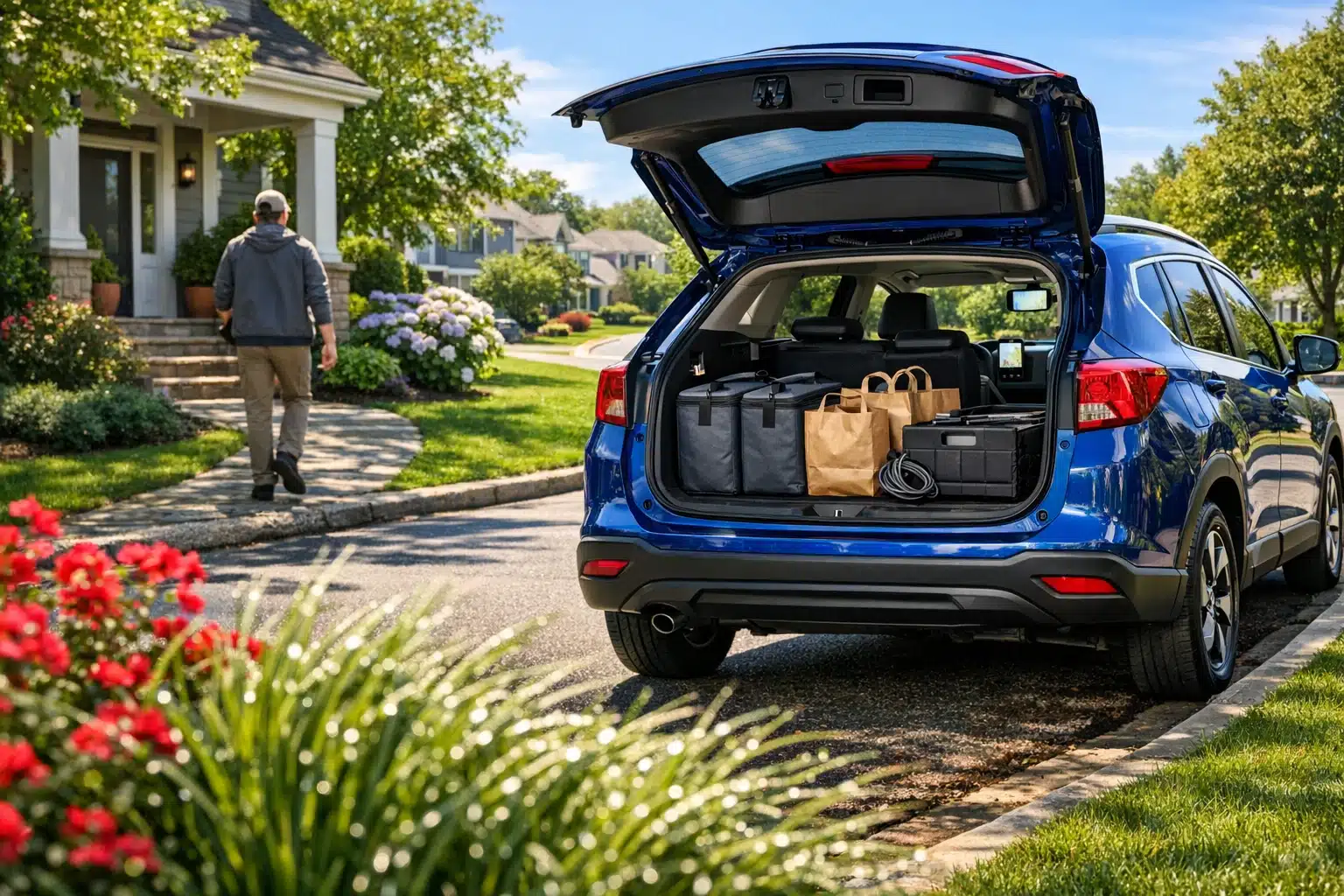
If personal eligibility gets you through the front door, your vehicle and equipment determine whether you can actually do the work efficiently. This is where many applicants underestimate the job. A delivery driver is not simply someone who owns a car and knows how to follow GPS. The vehicle has to be reliable enough for repeated stops, practical enough for grocery orders, and properly documented. Think of it as your rolling workspace. If the basics are weak, every shift becomes harder than it needs to be.
Most Walmart-related delivery opportunities require access to an insured vehicle. In many cases, you will also need current registration and proof of insurance that matches your legal name or approved use. The exact vehicle type can matter less than its condition and capacity, but capacity still influences the kinds of orders you can take comfortably. A compact sedan may work well for small orders or general merchandise, while a midsize car, crossover, or SUV can make large grocery runs easier. The difference is not just convenience. A tight trunk can slow loading, increase item damage risk, and turn a routine route into a puzzle of water cases, paper towels, and cold bags.
Technology requirements are just as important. Delivery work is managed through apps, which means your phone is part office, dispatcher, map, proof-of-delivery tool, and messaging device all at once. A weak battery, outdated operating system, or unstable data connection can disrupt the day quickly. Drivers often learn this the hard way after missing a pickup window because the app froze in a parking lot.
A practical checklist usually includes:
- A dependable vehicle with enough cargo space for the order types in your area.
- Current auto insurance and vehicle registration.
- A compatible smartphone with updated software.
- A car charger or portable battery pack.
- A phone mount for safer navigation.
- Insulated bags or storage bins, which are often helpful even when not strictly required.
There is also a cost comparison worth making. A larger vehicle may handle more order volume and reduce loading stress, but it can bring higher fuel and maintenance expenses. A smaller vehicle may be cheaper to run, yet less efficient for bulky deliveries. The best setup is not always the biggest car in the driveway; it is the one that balances operating cost, reliability, and the kinds of offers common in your zone.
Before applying, gather your documents in digital form and test your phone as if it were already a work device. Open maps, enable location services, check battery health, and make sure your insurance card is current. These small steps sound ordinary, but they often separate a smooth onboarding experience from an annoying one full of preventable delays.
How the Application Process Works and How Contractor Roles Compare with Employee Roles
The application process for Walmart-related delivery work is usually easier than applying for many traditional jobs, but that does not mean it is instant or identical everywhere. In many markets, a driver begins by creating an account through the relevant platform, choosing a delivery zone, and submitting personal information. From there, the next steps often include uploading documents, agreeing to terms, consenting to a background check, and waiting for approval. In areas with high driver interest, there may also be a waitlist. That detail surprises many applicants because gig platforms are often advertised as open doors, yet local supply and demand still matter.
The process typically unfolds in stages:
- Create an account and enter your contact details.
- Select your preferred zone or market.
- Upload license, insurance, and vehicle information if requested.
- Complete identity verification and tax setup.
- Authorize a background check.
- Wait for review, activation, or placement on a waitlist.
- Set up payment details and learn the app workflow.
If you are pursuing an employee delivery role instead of app-based contracting, the steps can feel more familiar. You may complete an online application, answer availability questions, participate in an interview, and then move through formal onboarding. This route can take longer, but it often comes with clearer management structures and expectations from the start.
The most useful comparison here is not speed. It is control versus structure. Contractor work usually gives drivers more freedom over when to log in, which orders to accept, and how often to work. That flexibility can be valuable for students, caregivers, or people stacking income sources. The other side of the coin is that contractors generally handle their own expenses, track their own mileage, and manage tax obligations without the same support an employee might receive. Employee roles are often less flexible, but they may offer steadier routines, direct supervision, and, depending on the role and schedule, access to workplace benefits or training resources.
Neither model is automatically better. It depends on how you define a good workday. If you like building your own schedule and do not mind the business side of tracking costs, a contractor model may feel refreshing. If you prefer fixed expectations and clearer boundaries, an employee role may be the safer fit. The smart move is to read the job description closely before applying. Many frustrations come not from the requirements themselves, but from people expecting one kind of arrangement and discovering they signed up for another.
Daily Work Reality, Performance Expectations, Earnings Factors, and Conclusion for Applicants
Passing the requirements is only the beginning. The real test comes once the app starts sending offers or the route sheet becomes part of your routine. Walmart delivery driving can look simple from the outside, but the job combines time management, customer service, safe driving, order handling, and problem-solving in a very compressed window. On a smooth day, it feels efficient and almost rhythmic: arrive, check in, load, drive, deliver, confirm, repeat. On a rough day, the same routine can include traffic, substitutions, apartment access issues, weather, and orders with enough bottled water to make your suspension sigh.
The exact daily tasks vary by order type. Some drivers mainly pick up prepared orders and bring them to the customer. Others may handle shop-and-deliver assignments, which require locating items in-store before completing the trip. That second format adds another skill layer because speed now depends on product familiarity, aisle navigation, and communication when items are unavailable. A person who enjoys fast, organized errands may thrive here. Someone who dislikes unpredictable shopping lists may prefer standard pickup delivery.
Performance matters even in flexible roles. Drivers usually need to be punctual, follow delivery instructions, handle items carefully, and maintain professional communication. Common success habits include:
- Arriving with enough fuel and phone battery for a full block of work.
- Checking addresses for gate codes, apartment numbers, and drop-off notes.
- Separating fragile, heavy, cold, and dry items logically.
- Keeping receipts, mileage records, or expense notes when relevant.
- Staying calm when a route changes shape midstream.
Earnings are influenced by several moving parts, such as local demand, time of day, delivery distance, order complexity, customer tips where applicable, and promotional incentives when offered. There is no honest way to describe delivery work as guaranteed easy money. Fuel, tires, maintenance, and time between orders all affect the real outcome. That is why experienced drivers often think in net earnings rather than gross payouts. A decent offer on the screen can become far less attractive if it sends you far outside your preferred zone or fills your car with a large order that takes extra handling time.
Conclusion: Is This a Good Fit for You?
If you are considering Walmart-related delivery work in 2026, the best approach is practical rather than emotional. Start by confirming the role type, then check your license, insurance, vehicle condition, phone setup, and comfort with app-based workflow. If you want flexibility and understand the trade-offs of contractor work, the opportunity may suit you well. If you want clearer structure and a more traditional job setup, an employee-based delivery role may be the better destination. Either way, the strongest applicants are not just licensed drivers. They are organized, realistic, and ready for the small daily details that turn delivery from a casual side task into dependable work.