Under Eye Laser Technology: Complete Guide for 2026
The skin beneath the eyes is often the first place where stress, sleep loss, sun exposure, and inherited traits begin to show, so it is no surprise that laser treatment gets so much attention. Still, the under-eye area rewards nuance, not hype. Devices differ in wavelength, pulse length, depth of injury, and recovery profile, which means two treatments described with the same buzzwords can produce very different outcomes. Understanding the technology helps readers judge benefits and limits with far more confidence.
This guide starts with the biology of the under-eye region, then moves into the main laser systems used near it, the safety rules that shape treatment planning, and the realistic results readers should expect. It also compares lasers with other common options, because not every dark circle or crease is really a laser problem in disguise.
Outline
- The anatomy and common concerns of the under-eye area
- The major laser technologies and how they differ
- Who is a suitable candidate and how treatment is performed safely
- Recovery, results, risks, and comparisons with alternatives
- A practical 2026 decision guide for readers considering treatment
Why the Under-Eye Area Is So Difficult to Treat
The under-eye region looks simple at a glance, yet it behaves like one of the most technically demanding zones on the face. The skin here is among the thinnest on the body, which means small changes in pigment, blood flow, hydration, and collagen structure become visible very quickly. A little shadow can look like a lot of fatigue. A minor loss of elasticity can read as years of aging. That is why patients often describe the problem with one word, usually “dark circles,” while clinicians break it into several different causes before recommending any technology.
Not all under-eye concerns come from the same source. Some people mainly have brown discoloration linked to pigment, post-inflammatory change, or sun exposure. Others have a blue or purple cast caused by visible vessels showing through delicate skin. Many are bothered less by color and more by hollowness, where a tear trough creates a shadow that makes the area look tired even after a full night’s sleep. Fine lines, crepiness, puffiness, and skin laxity can also overlap. In other words, the under-eye zone is less like a single problem and more like a crowded intersection where anatomy, genetics, and lifestyle all arrive at once.
This matters because lasers do not treat every cause equally well. If the main issue is surface texture or fine wrinkling, resurfacing lasers may help significantly by stimulating collagen remodeling. If the problem is vascular, a different device choice may be needed. If the darkness is mostly a shadow from volume loss or fat bulging, even a well-executed laser treatment may offer only modest improvement. That is one reason some disappointed patients are not victims of bad technology so much as bad matching between concern and tool.
Several forces make this region especially sensitive to treatment planning:
- Very thin skin means lower margins for error
- Swelling is common because the tissue holds fluid easily
- Eye safety requires specialized protection and conservative technique
- Different causes of “dark circles” often coexist in the same person
Seen this way, under-eye laser technology is not a magic eraser. It is a set of precise instruments used on one of the face’s most revealing surfaces. When readers understand that complexity first, the rest of the treatment discussion becomes far more grounded and useful.
How Laser Technologies Differ: CO2, Er:YAG, Fractional, and Non-Ablative Systems
Laser technology is often discussed as though it were a single category, but that is a bit like talking about “cars” without distinguishing between a bicycle-sized city runabout and a heavy-duty truck. In practice, different lasers interact with different tissue targets, and that changes both outcomes and downtime. For under-eye work, the most important concepts are chromophores, heat, depth, and whether the treatment is ablative or non-ablative.
An ablative laser removes controlled portions of the skin surface while also heating tissue below, which can produce noticeable resurfacing and collagen renewal. Carbon dioxide lasers, commonly called CO2 lasers, operate at 10,600 nm and are strongly absorbed by water in the skin. They are powerful tools for fine lines, crepey texture, and more advanced photoaging, but they typically involve more redness, oozing, crusting, and recovery time. Er:YAG lasers, usually operating at 2,940 nm, are also absorbed by water yet tend to create less residual thermal injury than CO2 when used in comparable resurfacing settings. That can mean a more precise ablation profile and, in many cases, somewhat faster healing, though results depend heavily on settings and technique.
Fractional technology changed the conversation by treating microscopic columns of tissue instead of fully removing an entire surface. Think of it as aerating a lawn rather than digging up the whole yard. Fractional ablative lasers still create significant remodeling, but the surrounding untreated skin speeds re-epithelialization. Fractional non-ablative lasers, such as certain 1,540 to 1,565 nm systems, heat the dermis without vaporizing the top layer in the same way. Their results are generally subtler per session, yet the recovery tends to be easier and safer for a wider range of patients when selected carefully.
Other devices may play a role depending on the dominant issue:
- Nd:YAG lasers at 1,064 nm can be used for vascular concerns and deeper heating in selected cases
- Pigment-focused systems may help some discoloration patterns, though caution is essential near the eye
- Fractional resurfacing devices are often chosen when texture and mild laxity are the main goals
The trade-off is straightforward but important. More aggressive resurfacing may yield stronger improvement in wrinkling and skin quality, but it usually demands more healing time and stricter aftercare. Gentler systems often require a series of treatments and patience. By 2026, the real sophistication is not that lasers have become magical. It is that treatment can be tuned more precisely, with clinicians selecting pulse duration, energy density, spot pattern, and stacking strategy based on skin type and the exact problem being treated.
Candidate Selection, Consultation, and What a Safe Treatment Process Looks Like
A safe and successful under-eye laser procedure begins well before the first pulse of light. The consultation is not a formality; it is the part that determines whether laser treatment makes sense at all. Clinicians assess skin tone, texture, laxity, pigment tendency, medical history, medication use, prior procedures, ocular health, and healing patterns. For example, someone with a strong risk of post-inflammatory hyperpigmentation may need a more conservative device choice, pretreatment skin preparation, or a completely different strategy. A patient with significant lower eyelid bagging or pronounced tear trough hollowing may be better served by surgery, filler, or a combined plan rather than laser alone.
The best consultations also sort out expectations with unusual honesty. Under-eye lasers can improve lines, crepiness, and some forms of discoloration, but they do not replace sleep, reverse genetics, or reposition fat pads. That is not a weakness of the technology. It is simply the reality of anatomy. A careful specialist may even spend more time explaining limitations than selling benefits, and that is often a good sign rather than a disappointing one.
During treatment, eye safety is non-negotiable. Proper ocular shields, often metal corneal shields when appropriate, are used when treatment comes close to the eyelid margin. The skin may be numbed with topical anesthetic, though stronger resurfacing sometimes requires additional pain control measures. The session length depends on the device and treatment area, but under-eye procedures are usually relatively short. What matters more than speed is precision, especially near the orbital rim and lash line. This is a zone where “close enough” has no place.
Readers considering treatment should ask practical questions such as:
- What type of laser is being used and why was it chosen for my specific concern?
- How much downtime is typical with these exact settings?
- What complications are most relevant for my skin tone and medical history?
- Will I likely need one session or a series?
- What eye protection is used during treatment?
Good preparation may also include sun avoidance, adjustment of irritating topical products, antiviral prophylaxis for patients with a history of cold sores in selected cases, and a plan for gentle aftercare. The treatment room may look calm, but safe laser use is a choreography of details. That quiet precision is one of the hidden technologies behind every successful result.
Results, Recovery, Risks, and How Lasers Compare with Other Under-Eye Options
One of the most useful truths about laser treatment is also one of the least glamorous: results rarely unfold all at once. Mild swelling may appear quickly, but collagen remodeling takes time. With non-ablative fractional systems, improvement often builds gradually over weeks after each session. With stronger ablative resurfacing, the visible change may be more dramatic, yet the recovery period is longer and the redness may linger even after the skin has re-epithelialized. Patients who expect a next-day transformation usually misunderstand the biology. Lasers trigger repair; they do not airbrush the face in real time.
Recovery varies with device choice, energy settings, and individual healing. Common short-term effects include redness, swelling, a warm sensation, dryness, flaking, and temporary sensitivity. More intensive resurfacing may involve crusting or pinpoint oozing during early healing. Most of this is expected, not alarming, provided that aftercare is followed and the skin is monitored appropriately. The more important discussion concerns complications. These can include prolonged redness, infection, milia, textural irregularity, scarring in rare cases, worsening pigmentation, or unsatisfactory improvement because the underlying problem was not laser-responsive in the first place.
Comparison with other options helps readers set priorities:
- Topical retinoids and pigment agents can improve fine texture or discoloration, but usually more slowly and less dramatically
- Chemical peels may help selected pigment and texture issues, though under-eye use requires caution
- Fillers address hollowing and shadowing better than lasers when volume loss is central
- Blepharoplasty is more effective for significant skin excess or fat prolapse
- Radiofrequency and microneedling devices may improve laxity with different recovery profiles
Cost should also be weighed against objective fit. A lower-priced session that targets the wrong issue is not economical. A more expensive treatment from a qualified specialist may deliver better value if it is thoughtfully selected and safely performed. This is especially true in the under-eye region, where subtlety matters more than spectacle. The best outcomes often look less like a dramatic makeover and more like a face that appears rested without announcing why. In aesthetic medicine, that quiet improvement is often the most sophisticated result of all.
What Prospective Patients Should Remember About Under-Eye Laser Technology in 2026
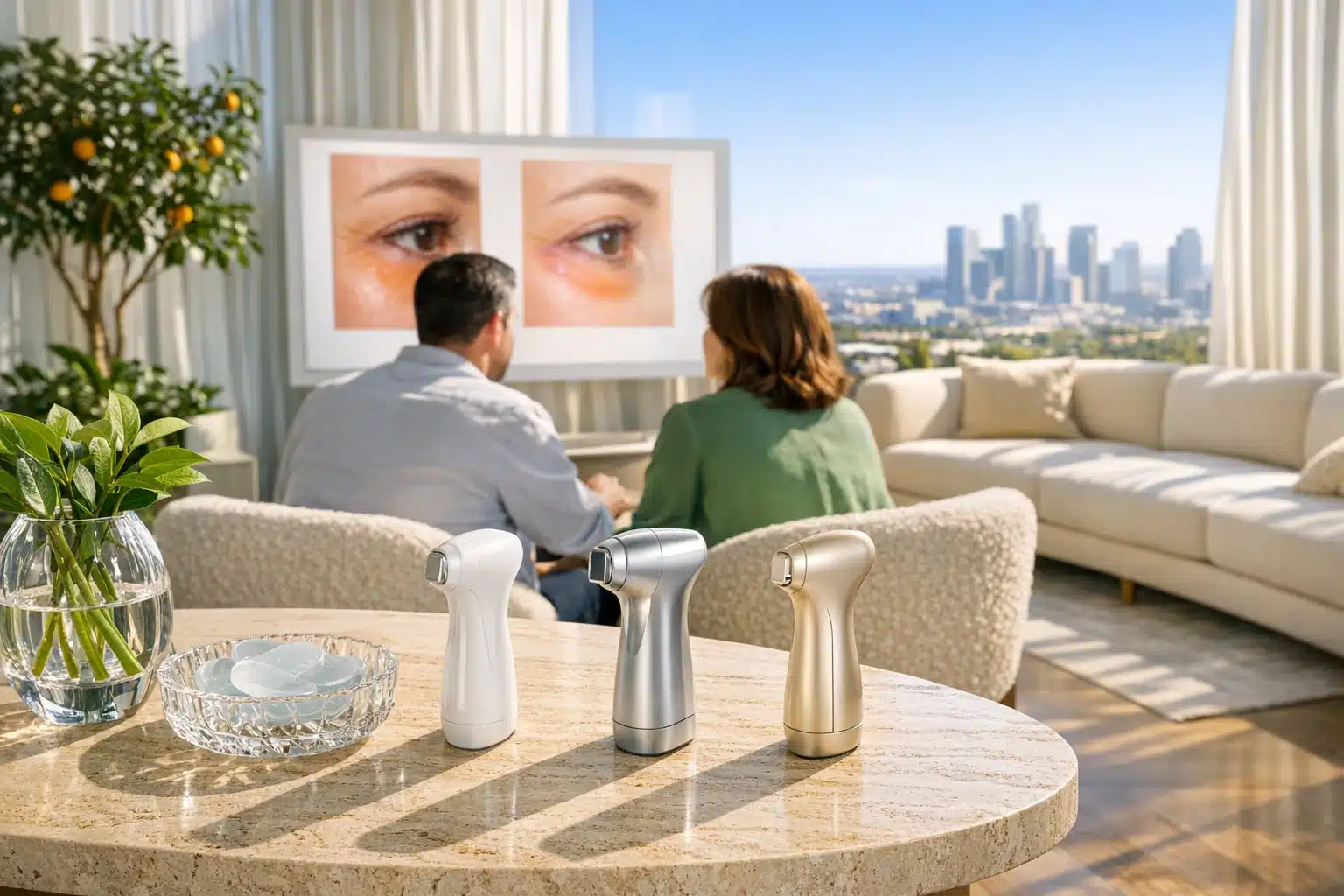
In 2026, the most meaningful progress in under-eye laser technology is not just about newer machines. It is about better matching of devices to anatomy, improved parameter control, more refined cooling and scanning systems, and a wider appreciation that combination treatment often works better than a single-tool mindset. Digital imaging can help document texture, pigmentation, and wrinkle depth more consistently. Some clinics now use advanced photography and software-assisted analysis to track subtle changes over time. That can make consultations more transparent, but it does not replace clinical judgment. A clever screen still needs a careful human behind it.
For readers deciding whether to explore treatment, the clearest takeaway is this: under-eye lasers are best thought of as problem-specific tools. They are often well suited for fine lines, crepey skin, and certain superficial discoloration patterns. They are less effective when darkness is mostly caused by deep-set anatomy, prominent fat pads, or major volume loss. This distinction saves money, saves frustration, and often leads to more realistic expectations from the start.
A practical decision framework looks like this:
- If your main concern is texture and mild wrinkling, resurfacing may be worth discussing
- If your issue is hollowness, ask whether filler or another structural approach makes more sense
- If puffiness dominates, seek evaluation for surgical or supportive options rather than assuming a laser can flatten it
- If you have deeper skin tones or pigment sensitivity, prioritize clinicians experienced in treating your skin type safely
Perhaps the most important advice is also the least flashy. Choose the practitioner before you choose the machine. The under-eye area is a place where expertise, restraint, and follow-up care matter as much as device specifications. Marketing tends to spotlight the hardware, but outcomes are shaped by assessment, settings, safety measures, and the honesty of the plan. For readers curious about treatment, that is good news. It means the smartest path is not chasing the loudest trend. It is finding a qualified expert who can explain what laser technology can improve, what it cannot, and how to make a decision that fits your face, your skin, your recovery tolerance, and your long-term goals.