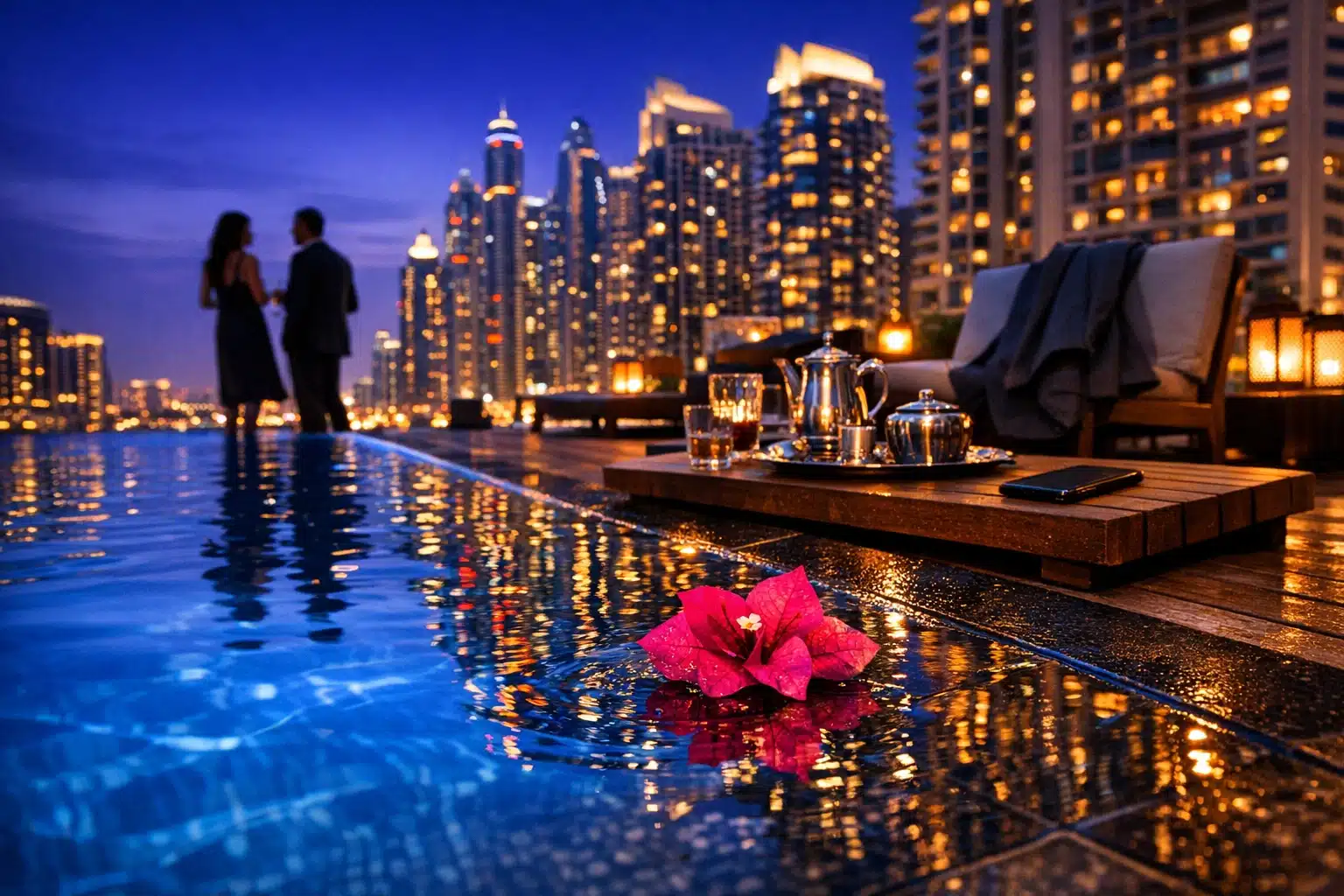
Dubai Social Work Media: Complete Guide for 2026
Dubai often appears in headlines as a city of towers, tourism, and fast growth, yet its real story unfolds in the everyday links between people, workplaces, and information. Social customs influence careers, work rhythms shape personal life, and media platforms amplify both opportunity and misunderstanding. Looking at these three areas together gives a fuller picture of how Dubai operates in 2026 and why it matters to residents, employers, creators, and newcomers.
Outline: This article first examines Dubai’s social fabric, then explains work culture and career realities, maps the media landscape, shows how these areas overlap in daily life, and ends with practical conclusions for people planning to live, hire, create, or build a public profile in the city.
Dubai’s Social Fabric: A Global City with Local Rules
Dubai is often described as international, but that word can feel too small for what the city actually is. In a single afternoon, a resident may hear Arabic in an official setting, English in a meeting, Hindi in a taxi, Tagalog in a café, and Russian at a beachfront restaurant. This diversity is not a decorative feature; it is the operating system of the city. Foreign nationals make up the large majority of the population, which means daily life is shaped by constant cultural negotiation. Compared with older global cities such as London or New York, Dubai can feel more deliberately organized, more service-driven, and more transient. People arrive to build careers, launch companies, or improve their income, and that temporary mindset often changes how friendships, communities, and routines are formed.
At the same time, Dubai is not culturally neutral. It sits within the United Arab Emirates, where local traditions, Islamic values, and public expectations still shape the tone of everyday life. That matters in practical ways. Public behavior is generally more restrained than in many Western nightlife capitals. Dress is flexible in many private and leisure spaces, yet modesty is appreciated in government offices, family neighborhoods, and religious settings. During Ramadan, the social rhythm changes noticeably, and understanding that shift is part of social intelligence. A person who thrives in Dubai usually learns that respect is not merely polite; it is functional. It smooths interactions with colleagues, service staff, authorities, and neighbors.
Several habits help newcomers adjust quickly: • Greeting people warmly and professionally matters more than many expect. • Punctuality is valued, even when social gatherings remain somewhat fluid. • Asking about someone’s background can be normal, but overly personal questions can feel intrusive. • WhatsApp is often used for practical coordination, invitations, and community updates. • Weekend plans vary by industry, income level, and cultural group, so social circles can look very different from one neighborhood to another.
Another important feature of Dubai’s social life is segmentation. The city can feel like several cities stacked on top of each other: luxury hotel networks, family-oriented suburban communities, creative clusters, long-established expatriate neighborhoods, and fast-moving corporate districts. A young media freelancer living near Jumeirah, a logistics manager in Deira, and a teacher in Mirdif may all describe “Dubai life” in completely different ways. Cost also shapes social experience. Fine dining, beach clubs, and high-profile events get the attention, but community sports, cultural festivals, neighborhood cafés, and public spaces are just as important. In that sense, Dubai rewards curiosity. The skyline may be the postcard, but the human map is the real guide.
Work in Dubai: Opportunity, Pace, and Professional Expectations
Dubai’s job market attracts people for a simple reason: it offers concentration. Industries that might be spread across several cities elsewhere are packed into one metropolitan economy here. Tourism, aviation, logistics, real estate, construction, retail, healthcare, education, financial services, technology, and media all have visible footprints. That concentration creates opportunity, but it also raises the level of competition. A professional moving from a slower regional market may find Dubai exciting and demanding at the same time. The city often rewards speed, presentation, and adaptability. In many workplaces, employers value people who can handle diverse teams, changing priorities, and clients from multiple countries without losing composure.
Work culture in Dubai is best understood as a blend rather than a single model. Some offices resemble British corporate environments, others feel closer to South Asian management culture, and many combine global processes with distinctly local expectations around hierarchy and relationship-building. Compared with parts of Northern Europe, workplace communication may be less blunt and more diplomatic. Compared with some North American startups, decision-making can be more top-down. Personal trust matters. Credentials open doors, but reliability keeps them open. This is why networking continues to matter so much. The city’s professional life often moves through referrals, introductions, event conversations, and industry groups as much as through formal job boards.
There are also structural realities that workers need to understand. Employment is closely connected to visa arrangements, and compensation packages may include housing allowances, transport benefits, health insurance, or school support depending on sector and seniority. Salaries that look strong on paper need to be weighed against rent, schooling, transport, and lifestyle costs. In recent years, hybrid work has expanded in some sectors, especially technology, consulting, and regional corporate roles, but many employers still prefer visible office presence. Common workplace expectations include: • clear communication without unnecessary confrontation, • respect for rank and decision chains, • responsiveness outside strict nine-to-five habits in some sectors, • awareness that multinational teams may interpret tone differently, • and careful handling of email, messaging, and meeting etiquette.
For many people, the biggest surprise is that success in Dubai depends on more than technical skill. The strongest professionals usually combine competence with context. They know when to be direct, when to be patient, and how to read a room that may include six nationalities and three business cultures at once. That is why Dubai can feel like a professional accelerator. It tests judgment as much as talent. For ambitious workers, the city can provide rapid exposure to major clients, regional responsibilities, and entrepreneurial opportunities. For others, the pressure of cost, pace, and performance can make the experience exhausting. Both realities are true, and understanding that duality is the first step toward building a sustainable career here.
Dubai’s Media Landscape: From Traditional Outlets to Creator-Driven Influence
Media in Dubai is broad, multilingual, and deeply tied to business. The city is not only a place where media is consumed; it is also a place where media is produced, distributed, branded, and monetized at regional scale. Traditional newspapers, radio stations, television networks, trade publications, and corporate communications teams remain important, but digital platforms increasingly shape public attention. A restaurant launch, property announcement, fintech conference, fashion event, or tourism campaign now travels through a mix of editorial coverage, influencer content, short-form video, podcasts, email newsletters, and performance advertising. In practical terms, this means media in Dubai is not one lane. It is an entire interchange.
Dubai’s position as a regional business hub helps explain this. Companies often use the city as a base for reaching audiences across the Gulf, the wider Middle East, Africa, and South Asia. English-language content is common, Arabic-language communication remains essential in many contexts, and bilingual strategies are often the most effective. Free zones and media-oriented business districts have also helped create an ecosystem where agencies, production houses, publishers, event firms, and freelancers can operate close to one another. Compared with media markets such as Los Angeles or London, Dubai is smaller in total cultural output, yet it can be more commercially integrated. Brand partnerships, event sponsorships, corporate storytelling, and destination marketing carry especially strong weight.
The digital side of the market is impossible to ignore. Smartphone use is pervasive, social media engagement is high, and audiences are accustomed to polished visual content. Certain sectors are especially active online: • real estate uses video, tours, and personality-driven sales content, • hospitality depends heavily on reviews, reels, and experiential storytelling, • retail and beauty rely on creators and targeted campaigns, • professional services increasingly use LinkedIn thought leadership, • and public institutions invest in clear, multilingual digital communication.
However, Dubai’s media environment also requires discipline. Content creators, brands, and editors work within legal and regulatory boundaries that may be stricter than in some Western markets. Accuracy, defamation risk, licensing, intellectual property, and cultural sensitivity all matter. That does not make the scene dull; it makes it more deliberate. The creators and companies that succeed tend to understand both format and context. A flashy post may earn views, but credibility still wins long-term trust. In Dubai, media is not only about visibility. It is about reputation, compliance, and the ability to speak to different communities without losing clarity. That combination makes the city especially interesting for communicators who can think beyond trends and build messages that travel well across cultures.
Where Social Life, Work, and Media Intersect in Everyday Dubai
If Dubai has a hidden engine, it is the way social life, work, and media constantly overlap. In some cities, these spheres remain separate: you leave the office, meet friends, and consume media as a spectator. In Dubai, the boundaries are often thinner. A breakfast meeting can become a job lead. A weekend event can produce a client introduction. A social media post can influence how a recruiter, landlord, collaborator, or investor perceives you. The city is highly networked, and that has practical consequences. People often build opportunity not just through formal expertise, but through how consistently and intelligently they show up in public and semi-public spaces.
This overlap is especially visible in networking culture. Industry events, launches, exhibitions, trade shows, community meetups, and niche gatherings are a normal part of professional life. LinkedIn may be the visible layer, but much coordination happens through private messages, WhatsApp groups, and recurring in-person circles. For freelancers and entrepreneurs, this can be a powerful advantage. A small conversation today may become a partnership three months later. For newcomers, however, the same environment can feel opaque. It may seem as if everyone already knows everyone else. The truth is less dramatic. Dubai is large, but many industries operate through repeated contact, which means consistency often matters more than instant charisma.
There are a few useful principles for managing this intersection well: • treat online presence as part of your professional footprint, not a separate hobby, • be careful with public criticism, sarcasm, and casual oversharing, • follow up after meetings, because polite persistence is often remembered, • understand that image matters, but substance is what sustains momentum, • and avoid confusing visibility with trust.
Consider a simple example. A young marketer attends a media panel, speaks briefly with a founder, connects on LinkedIn, comments thoughtfully on that founder’s later post, and then receives an invitation to discuss a freelance project. Nothing about that chain is unusual in Dubai. The city often works through stacked interactions rather than single dramatic breakthroughs. The same principle applies to employers. A company’s workplace culture, Glassdoor reputation, staff content, event presence, and community engagement all feed into how candidates judge it. In other words, social behavior, work identity, and media expression are not separate stories here; they are chapters in the same book. That is why Dubai can feel electric. Every channel hums at once, and people who learn the rhythm can move through the city with much greater confidence.
Conclusion: What Newcomers, Professionals, and Creators Should Know
For anyone trying to understand Dubai in 2026, the most useful insight is also the simplest: do not study the city in fragments. Social life affects work. Work shapes reputation. Media amplifies both. Once that pattern becomes clear, Dubai starts to make far more sense. The city is not only a destination for ambition; it is a system of relationships, expectations, and signals. People who arrive expecting a purely glamorous lifestyle often miss its structure. People who arrive ready to observe, adapt, and contribute usually find far more room to grow.
Newcomers should focus first on reading context rather than chasing image. Learn how people communicate. Notice how neighborhoods differ. Pay attention to timing, etiquette, and tone. Professionals should think beyond job titles and ask harder questions about package value, team culture, career progression, and market fit. Creators and media workers should remember that strong storytelling in Dubai usually depends on cultural awareness as much as production quality. Flash can attract attention for a moment; relevance keeps audiences interested. Employers, meanwhile, should recognize that talent increasingly evaluates companies through visible culture, not salary alone.
A practical way to approach the city is to keep four priorities in view: • build genuine relationships before you need them, • understand the commercial logic of your sector, • communicate clearly across cultures, • and treat your public presence as an extension of your professional character.
Dubai rewards people who can combine ambition with awareness. That combination matters whether you are moving for your first regional role, launching a company, entering media, or simply trying to build a stable life in a fast-moving place. Beneath the bright skyline is a city that pays close attention to trust, timing, and credibility. If you can understand those three ideas, you are already much closer to navigating Dubai well.